

Have you ever been reading the Bible and stumbled across the word Moab, wondering, Who were these people—and why do they matter so much? From dramatic family stories to intense battles and powerful prophecies, Moab appears throughout the Old Testament in moments that shape biblical history.
But what exactly is the Moab Bible meaning? Is it just the name of an ancient nation, or does it carry deeper spiritual significance?
In this in-depth guide, we’ll explore:
- The definition and meaning of Moab in the Bible
- The origin and history of the Moabites
- Their role in key biblical events
- Spiritual lessons believers can learn today
- Comparisons with Israel and other neighboring nations
- Practical ways to study and understand Moab in Scripture
Let’s dive in.
What Is the Moab Bible Meaning?
The Moab Bible meaning refers to the land and people of Moab, a nation frequently mentioned in the Old Testament. Moab was located east of the Dead Sea, in what is modern-day Jordan.
Literal Meaning of “Moab”
The name Moab is traditionally linked to the Hebrew phrase meaning “from father.” This is connected to the nation’s origin story found in Genesis.
According to the Bible, Moab was founded by Moab, the son of Lot, who was the nephew of Abraham.
Biblical Origin Story
In Genesis 19, after the destruction of Sodom and Gomorrah, Lot’s daughters believed the world had ended. In fear of having no descendants, they made their father drunk and conceived children by him. The older daughter gave birth to Moab.
While uncomfortable, this origin story explains:
- Why Moab was related to Israel (through Lot and Abraham)
- Why relations between Israel and Moab were complicated
- Why Moab often symbolized moral and spiritual compromise
So, the Moab Bible meaning is tied not only to geography but to a complicated family history.
Where Was Moab Located?

4
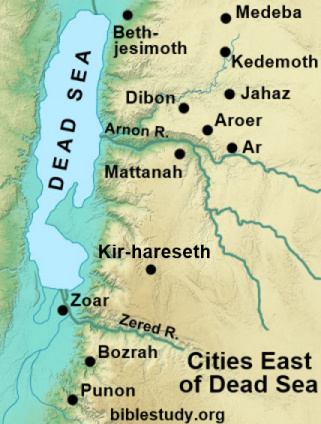
Moab was situated:
- East of the Dead Sea
- South of the Arnon River
- In present-day Jordan
The region was:
- Mountainous and elevated
- Fertile in parts
- Strategically important for trade routes
Because of its location, Moab frequently interacted—and clashed—with Israel.
The History of Moab in the Bible
Understanding the Moab Bible meaning requires looking at its role throughout biblical history.
1. Moab During the Exodus
As the Israelites journeyed toward the Promised Land, they passed near Moab.
The Moabite king Balak feared Israel’s growing numbers. He hired the prophet Balaam to curse them (Numbers 22–24). However, instead of cursing Israel, Balaam ended up blessing them.
This event highlights:
- Moab’s fear of Israel’s divine favor
- God’s protection over His people
- Moab’s recurring spiritual opposition
2. Moab and Idolatry
Later, Moab played a role in leading Israel into sin.
Moabite women enticed Israelite men into worshiping Baal of Peor (Numbers 25). This resulted in a plague among Israel.
In this context, Moab becomes associated with:
- Spiritual compromise
- Idolatry
- Moral temptation
3. Ruth: A Surprising Redemption Story
Not all Moab-related stories are negative.

4
One of the most beautiful redemption stories in the Bible comes from Moab.
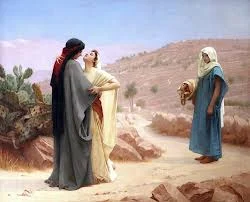
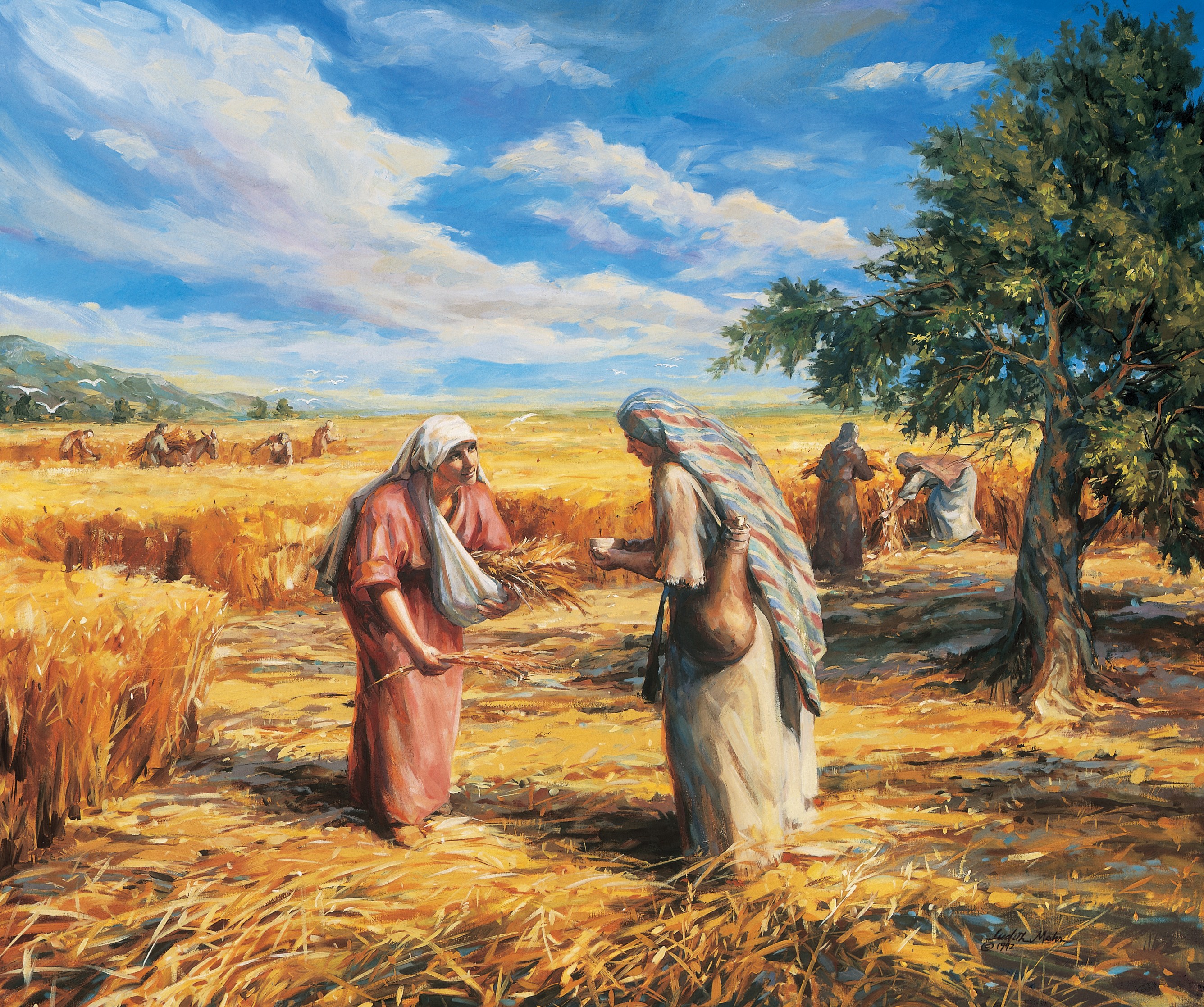
The book of Book of Ruth tells the story of Ruth, a Moabite woman who married an Israelite man. After becoming widowed, she chose to follow her mother-in-law Naomi back to Israel and embrace the God of Israel.
Ruth later married Boaz and became the great-grandmother of King David.
This is significant because:
- A Moabite woman became part of Israel’s royal line
- She appears in the genealogy of Jesus
- Moab is not just a symbol of opposition—but also redemption
4. Moab in the Kingdom Period
During the reign of King David, Moab was subdued and became subject to Israel (2 Samuel 8).
Later, Moab rebelled during the reign of Israelite kings, leading to military conflict (2 Kings 3).
The prophet Isaiah also delivered a prophecy of judgment against Moab (Isaiah 15–16), emphasizing God’s justice over all nations.
Key Characteristics of Moab in the Bible
Let’s summarize the main traits associated with Moab.
| Characteristic | Description | Biblical Example |
|---|---|---|
| Related to Israel | Descended from Lot | Genesis 19 |
| Frequent Enemy | Opposed Israel militarily | 2 Kings 3 |
| Spiritual Temptation | Led Israel into idolatry | Numbers 25 |
| Capable of Redemption | Ruth’s story | Book of Ruth |
| Subject of Prophecy | Judgment declared | Isaiah 15–16 |
This mixture of conflict and redemption makes the Moab Bible meaning layered and complex.
Spiritual Symbolism of Moab
Beyond history, many scholars see Moab as symbolizing deeper spiritual themes.
1. Compromise
Moab often represents:
- Worldly influence
- Idolatry
- Moral compromise
2. Pride
Prophets described Moab as proud and arrogant (Jeremiah 48).
3. Unexpected Grace
Despite judgment, Ruth shows that:
- God’s grace extends beyond national boundaries
- Faith matters more than background
- Outsiders can become insiders through faith
Moab vs. Israel: A Comparison
Understanding the Moab Bible meaning becomes clearer when comparing Moab with Israel.
| Aspect | Moab | Israel |
|---|---|---|
| Founder | Son of Lot | Descendants of Jacob |
| Covenant with God | No | Yes |
| Religious Practices | Idolatry (Chemosh, Baal) | Worship of Yahweh |
| Relationship | Often hostile | Chosen nation |
| Redemption Example | Ruth | Entire nation |
While Israel had a covenant relationship with God, Moab did not. Yet individuals from Moab could still enter God’s redemptive plan.
Strengths and Weaknesses of Moab in Biblical Narrative
Strengths
- Fertile land
- Strategic location
- Strong national identity
- Cultural influence
Weaknesses
- Idolatrous worship
- Pride and arrogance
- Repeated conflict with Israel
- Spiritual corruption
This balanced perspective helps us avoid oversimplifying the Moab Bible meaning.
Real-Life Example: Lessons from Ruth
Let’s take a closer look at a practical example.
Ruth was:
- A Moabite
- A widow
- A foreigner
Yet her declaration—“Your people shall be my people, and your God my God”—demonstrated:
- Loyalty
- Faith
- Courage
Despite her national background, her faith defined her future.
Application Today:
Your past does not disqualify you from God’s plan.
Practical Tips: How to Study Moab in the Bible
If you want to explore the Moab Bible meaning more deeply, here are practical steps:
1. Read Key Passages
Start with:
- Genesis 19
- Numbers 22–25
- Book of Ruth
- 2 Kings 3
- Isaiah 15–16
- Jeremiah 48
2. Use Bible Study Tools
Helpful resources include:
- Bible concordances
- Historical maps
- Study Bibles
- Audio Bible apps
3. Compare Prophecies
Look at how different prophets describe Moab. Notice recurring themes like pride and judgment.
4. Ask Reflection Questions
- What does Moab teach about spiritual compromise?
- How does Ruth reshape our understanding?
- What does God’s treatment of Moab reveal about His justice?
Interactive & Multimedia Suggestions
To deepen your understanding:
- Use Bible apps like YouVersion
- Watch animated Bible summaries on YouTube
- Explore archaeological maps of ancient Jordan
- Listen to sermon series on Ruth or the minor prophets
Visual tools make ancient geography and history easier to grasp.
Why the Moab Bible Meaning Still Matters Today
You might ask: Why study an ancient nation that no longer exists?
Because Moab represents timeless themes:
- The tension between family ties and spiritual allegiance
- The danger of pride and idolatry
- The power of redemption and grace
Moab reminds us that nations rise and fall—but God’s purposes remain.
Frequently Asked Questions About Moab
Was Moab always an enemy of Israel?
Not always. While often hostile, Moab also produced Ruth, who became part of Israel’s royal line.
Who did the Moabites worship?
They worshiped Chemosh, their national deity, along with other Canaanite gods.
Is Moab mentioned in the New Testament?
Moab is not directly emphasized in the New Testament, but Ruth’s presence in Jesus’ genealogy connects Moab to the New Testament story indirectly.
Final Thoughts on the Moab Bible Meaning
The Moab Bible meaning is far more than a geographical reference. It is a story of:
- Complicated family origins
- Conflict and rivalry
- Idolatry and pride
- Redemption and grace
From Balaam’s blessings to Ruth’s loyalty, Moab plays a surprisingly important role in biblical history.
If you’re studying the Bible seriously, understanding Moab adds depth to your reading and helps you see the larger narrative of God’s justice and mercy.
Ready to explore more?
Open your Bible, start with Genesis 19 or the Book of Ruth, and trace the story of Moab for yourself. You might be surprised how relevant it still feels today.
Discover More Post
Redeem Bible Meaning Understanding Its Significance and …
ubilee Bible Meaning Understanding Its Significance and …
